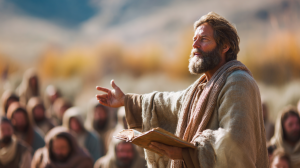
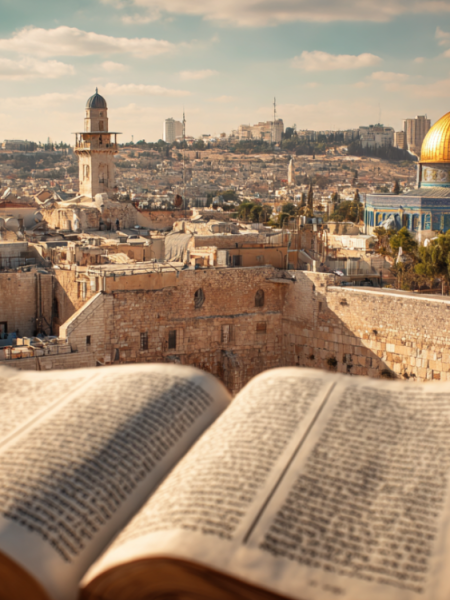
Evangelism has always been at the heart of God’s redemptive plan. From the moment Yeshua (Jesus) walked the dusty roads of Israel, He was revealing the Father’s love and calling His people—Am Yisrael, the people of Israel—back to Himself. The New Testament is filled with powerful examples of evangelism that began right here in the Land of Israel, among Jewish people who were longing for the promised Messiah. These biblical examples are not distant stories—they are deeply Jewish moments, rooted in Israel’s soil, culture, and covenant.
Today, as believers seek to share the message of Yeshua with the Jewish people, we can look to these examples for inspiration and guidance. Each moment in Scripture reveals a divine strategy, a heart of compassion, and a message of restoration—showing us how to reach our brothers and sisters with the Good News that the Messiah has come.
1. Yeshua’s Ministry in Israel: Love, Truth, and Compassion
Yeshua Himself is the greatest example of evangelism. His ministry began not in Rome or Athens, but in Israel—among His own people. He walked through Galilee, Judea, Samaria, and Jerusalem, teaching in the synagogues and proclaiming, “Repent, for the kingdom of heaven has come near” (Matthew 4:17).
What stands out about Yeshua’s approach is His deep compassion for His people. Matthew 9:36 tells us, “When He saw the crowds, He had compassion on them, because they were harassed and helpless, like sheep without a shepherd.” His evangelism was not about argument but about love. He reached the hearts of His people through healing, teaching, and personal encounters—like His conversation with the Samaritan woman at the well (John 4:7–26), or His call to Zacchaeus, a Jewish tax collector who found forgiveness and purpose in following Him (Luke 19:1–10).
For those seeking to share the message of Yeshua today—especially with Israelis—it’s vital to model this same love and compassion. Evangelism is not about debate; it’s about relationship. It’s about revealing the heart of the Father through Yeshua, who came first for the lost sheep of the house of Israel (Matthew 15:24).
2. The First Messianic Believers: A Jewish Movement of Faith
The book of Acts reminds us that the early community of believers in Yeshua was entirely Jewish. The apostles, disciples, and thousands who first believed in Jerusalem were all Jews who recognized Yeshua as the long-awaited Messiah.
In Acts 2, on the day of Shavuot (Pentecost), Peter stood before a Jewish crowd in Jerusalem and declared, “Let all the house of Israel know for certain that God has made this Yeshua, whom you crucified, both Lord and Messiah” (Acts 2:36). The response was powerful—three thousand Jewish souls came to faith that day.
This event reveals a key lesson: effective evangelism among the Jewish people begins with Scripture and prophecy. Peter used the Hebrew Scriptures—the Tanakh—to show how Yeshua fulfilled God’s promises to Israel. He quoted the prophet Joel and King David, connecting the Good News directly to the Jewish story.
Today, this same approach remains powerful. When sharing the gospel with Israelis or Jewish friends, it’s essential to show that belief in Yeshua is not foreign—it’s the most Jewish thing anyone can do. Yeshua is the fulfillment of God’s covenant with Abraham, Isaac, and Jacob. He is the promised Messiah who restores Israel to her calling and destiny.
3. Philip and the Ethiopian: Spirit-Led Evangelism
In Acts 8, we see another beautiful example of evangelism rooted in obedience and the leading of the Holy Spirit. Philip, a Jewish believer, was instructed by an angel to go to the desert road leading from Jerusalem to Gaza. There he met an Ethiopian official who was reading from the prophet Isaiah.
When the man asked Philip about the passage—Isaiah 53, which describes the Suffering Servant—Philip “began with that very passage of Scripture and told him the good news about Yeshua” (Acts 8:35).
This story highlights two crucial lessons: sensitivity to the Spirit and the centrality of Scripture. Philip didn’t rely on his own plans; he followed the Spirit’s direction and used the Tanakh to reveal the Messiah.
When sharing the message of Yeshua in Israel today, the same principle applies. We must depend on the Ruach HaKodesh (Holy Spirit) to guide our conversations, open hearts, and create divine appointments. God is still orchestrating encounters where hearts are ready to receive His truth—just as He did with Philip.
4. Paul’s Mission to the Jewish People: Passion and Perseverance
The Apostle Paul (Sha’ul) provides one of the most moving examples of evangelistic passion in the New Testament. Though he carried the gospel to the nations, his heart always burned for his own people, Israel. In Romans 9:2–3, Paul writes, “I have great sorrow and unceasing anguish in my heart. For I could wish that I myself were cursed and cut off from Messiah for the sake of my people, those of my own race, the people of Israel.”
Paul’s strategy always began in the synagogue. Acts 17:2 tells us that “as was his custom,” he reasoned with the Jews from the Scriptures, explaining and proving that Yeshua is the Messiah. Even when faced with rejection and persecution, Paul never gave up on his calling to reach his fellow Jews.
From Paul, we learn that evangelism among Israel requires perseverance and love that endures disappointment. Not everyone will immediately believe—but the message must continue to be shared, always with humility and compassion. Paul’s heart for Israel mirrors God’s heart: a relentless love for His covenant people.
5. Lessons for Today: Bringing the Gospel Back to Israel
The New Testament’s examples of evangelism all began in the Jewish context and are deeply tied to Israel’s story. Today, ministries like Israel Media Ministries continue this mission, using creative and Spirit-filled ways to bring the message of Yeshua back to His people.
Through digital outreach, social media, and media evangelism, they are following in the footsteps of the apostles—proclaiming that Yeshua is the promised Messiah of Israel. Their mission is not to convert Jews into something foreign but to call them home—to the faith of Abraham, to the covenant fulfilled in Yeshua.
Each believer has a role to play in this divine story. Whether through prayer, support, or direct sharing, we participate in God’s plan to reveal His Son to Israel once again.
Conclusion: Returning the Gospel to Its Roots
The New Testament’s stories of evangelism are not only history—they are a roadmap. They show us that the gospel began in Israel, through Jewish messengers, for Jewish people, and ultimately for the nations. And now, as prophecy unfolds, it is returning to where it started.
To share Yeshua with the people of Israel is to join in God’s eternal plan of redemption. It is an act of love, obedience, and hope—because the same Yeshua who ascended from Jerusalem will one day return to Jerusalem as King.
As Romans 11:26 declares, “And in this way all Israel will be saved.”
Yeshua Necklace in Hebrew - Gold or Silver
It is a critical time for us to proclaim the name of Yeshua to Israel and to the world. If you’re watching the news, antisemitism is on the rise! My people are under attack. And as you probably realize now, Israel is also divided, and a house divided against itself cannot stand (Mark 3:25). The only One who can save Israel is Yeshua. I have created a new piece of jewelry, silver and gold necklaces, to call supporters of Israel to declare the name YESHUA over Israel. They are available in both Hebrew and English (Yeshua).
The Relationship Between Israel And The Church:… As we reflect on the Word of God, there is a deep, sacred, often mystical relationship between Israel (the Jewish people, the sons and daughters of Abraham, Isaac, and Jacob)…
The Olive Tree: Exploring the Biblical Metaphor of… When Paul wrote to the believers in Rome, he used one of the most profound and enduring images in all of Scripture — the olive tree. This tree, deeply rooted in…
The Importance of Jewish Evangelism: Why Sharing the… From the very beginning, Israel has always held a special place in God’s redemptive plan for humanity. The story of salvation begins with the Jewish people — from Abraham, whom…
STAY UP-TO-DATE
Subscribe to stay up-to-date with news from Israel